
Seeing Between the Lines: A Reflection on Witness (1985) and the Language of Cinematography
Between Faith and Violence: How Cinematography Bridges Two Worlds in Witness

This reflection emerged from my graduate studies in the MFA Film & Television program at Asbury University, as part of our Cinematography course exploring how visual design tells story. In this class, I had the opportunity to study Witness (1985)—a film that quietly demonstrates how light, space, and movement can communicate more than dialogue ever could.
When I first watched Witness, I was captivated by its restraint. Peter Weir’s story of an Amish boy who becomes a witness to murder isn’t driven by fast dialogue or heavy exposition…it’s driven by images that breathe. Cinematographer John Seale doesn’t decorate scenes with light; as he once said, he uses light “to reveal the soul of a people who live closer to the sun and earth than we do.” That philosophy shaped the way I viewed this film…and how I now think about the power of cinematography as a storytelling language that transcends sound and speech.
The Grammar of Space
Throughout Witness, Seale constructs an ongoing dialogue between two worlds: the rural Amish community and the modern urban sprawl of Philadelphia. This conversation unfolds not in words, but in space. The Amish world is defined by flat space…compressed images, stillness, and the harmony of shapes within the frame. The English world, by contrast, expands into deep space…movement, chaos, vanishing points, and uncertainty. These two visual languages define the moral and emotional geography of the film.
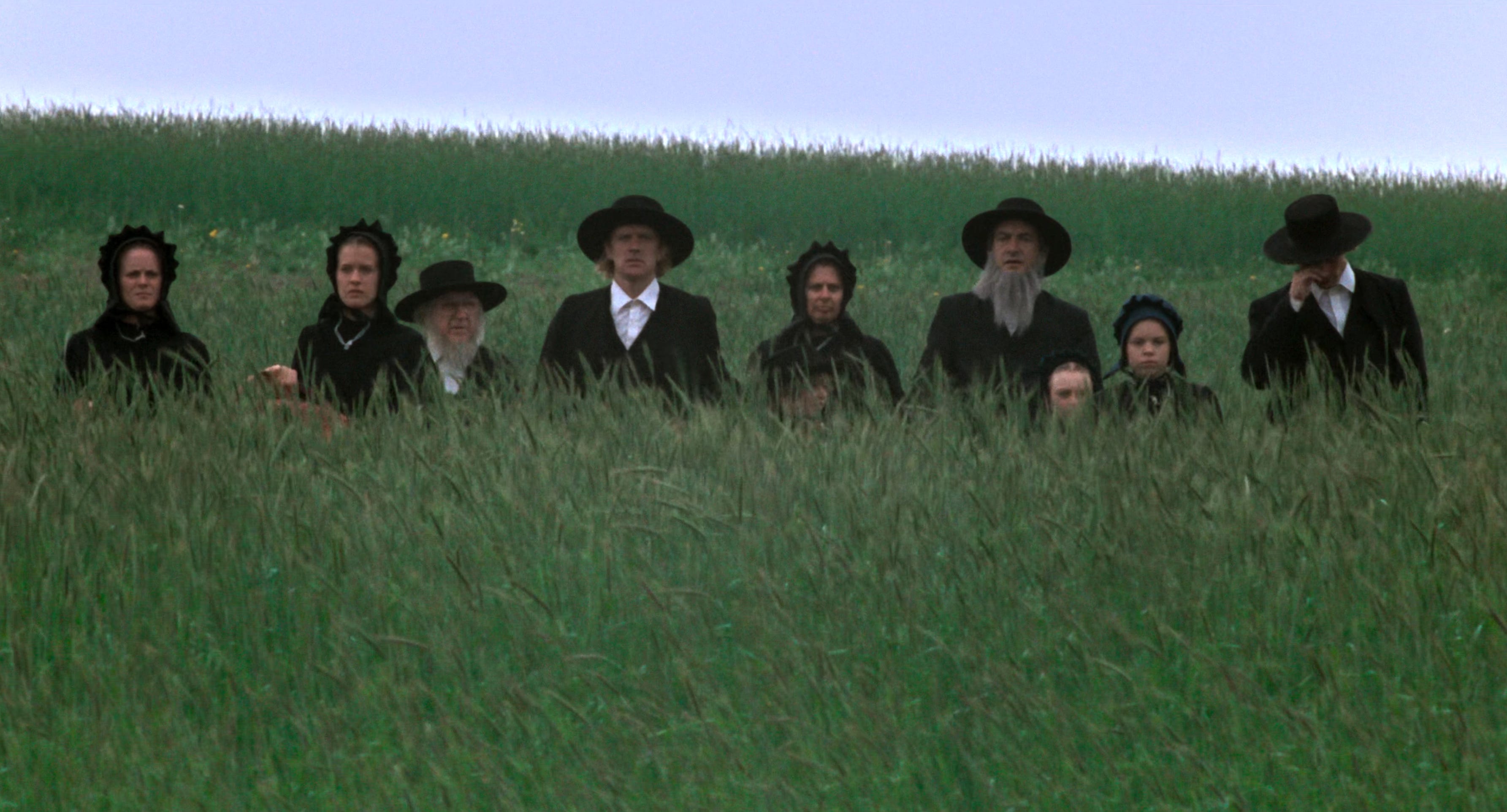
The opening funeral scene sets this tone beautifully. Weir and Seale use a long lens to flatten the composition: black hats and bonnets move across a golden field like brushstrokes in a painting. The scene feels timeless and orderly. There’s no camera movement, no dramatic editing…just the deliberate rhythm of life and death within a community grounded in faith. This is flat space at its purest: moral clarity rendered through stillness. The figures merge into the landscape, their individuality subdued for communal harmony. This early compression of space creates both visual peace and emotional distance, preparing us for the disorder of the modern world that follows.
Crossing Worlds
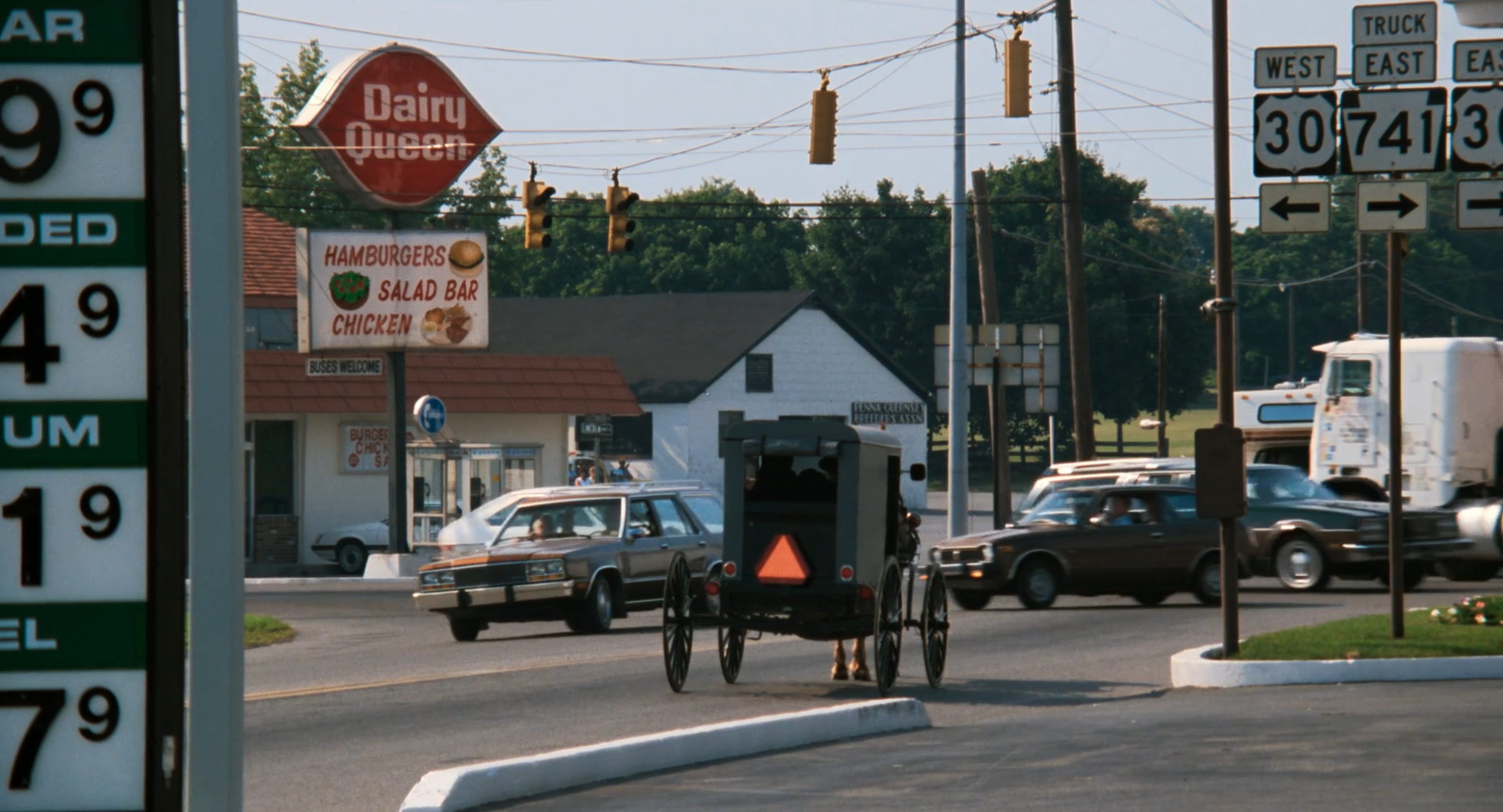
When Rachel and her son Samuel travel to the train station, the camera shifts—literally and philosophically. The journey sequence begins in deep space: the buggy moves across open farmland beneath the sky’s soft, natural light. The world feels expansive and spiritual. But as they approach the city, that openness tightens. Seale begins to compress the image, using longer lenses and harder light. The horse and buggy, symbols of simplicity, are suddenly boxed in between massive trucks—an image that turns spatial compression into social commentary. The Amish are literally pressed between worlds.
The train station itself becomes a threshold. The camera movement grows fluid, weaving through the crowd as Rachel and Samuel enter an ambiguous space—neither home nor city, neither safety nor danger. This scene visually marks the collapse of moral boundaries that defines the rest of the film. The use of space tells us: they have crossed into a world that does not share their rhythm or their rules.
Silence and Suspense
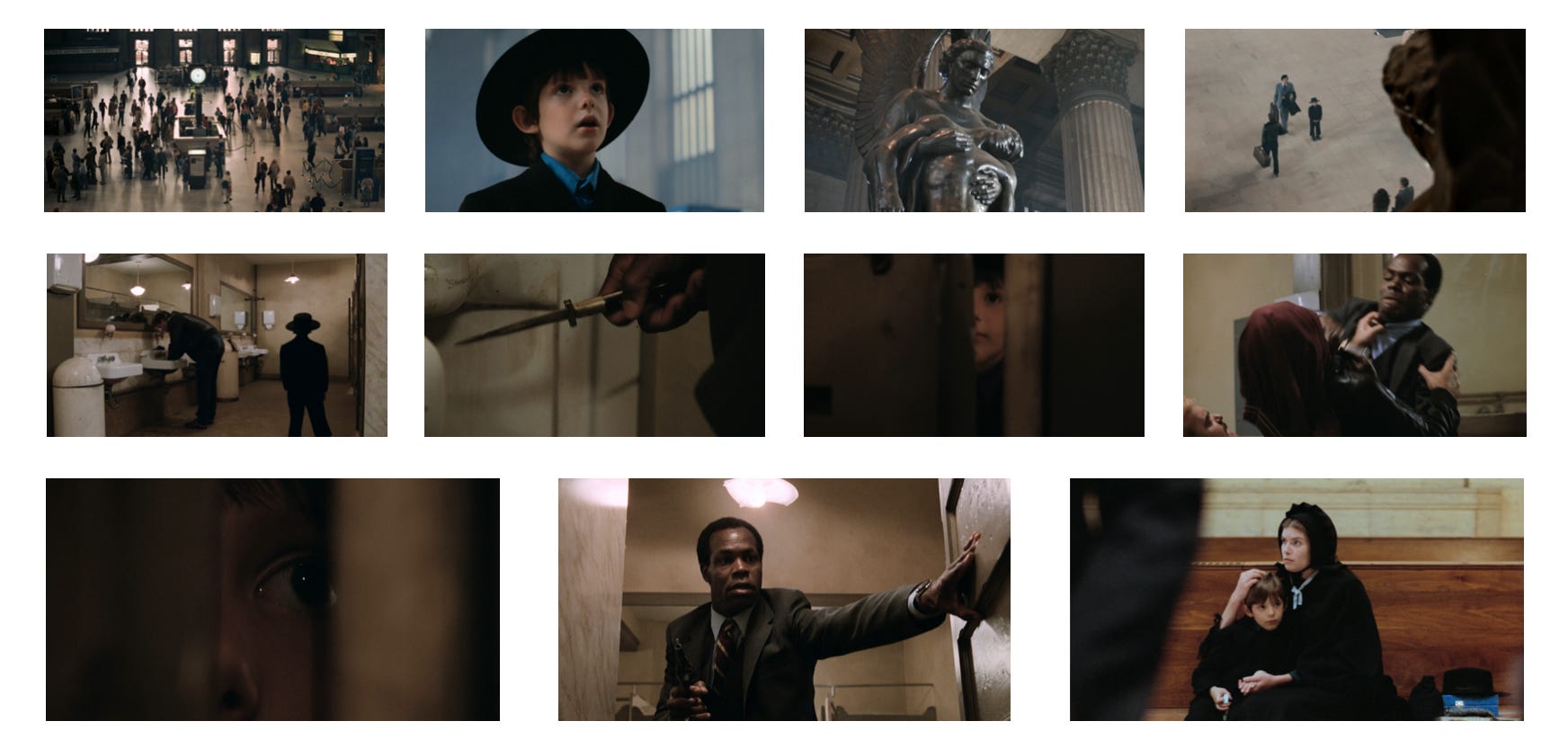
Perhaps the film’s most famous moment…the train station murder scene—is where Seale’s mastery of visual storytelling truly reveals itself. There’s almost no dialogue, but every shot breathes with tension. The restroom is built as a maze of mirrors, corridors, and partial reflections, creating layers of deep and ambiguous space. Through Samuel’s eyes, the audience becomes both witness and prisoner.
Cold, artificial light isolates the boy’s innocence against the hardness of tile and steel. The killers move in and out of reflections (half-seen, half-hidden) embodying moral distortion. As Danny Glover’s character stalks the space, the composition keeps narrowing until the child is trapped in the corner of the frame, surrounded by vertical lines. The camera itself feels afraid to breathe. What could have been a simple suspense scene becomes a study in perspective: Seale uses space as the true antagonist.
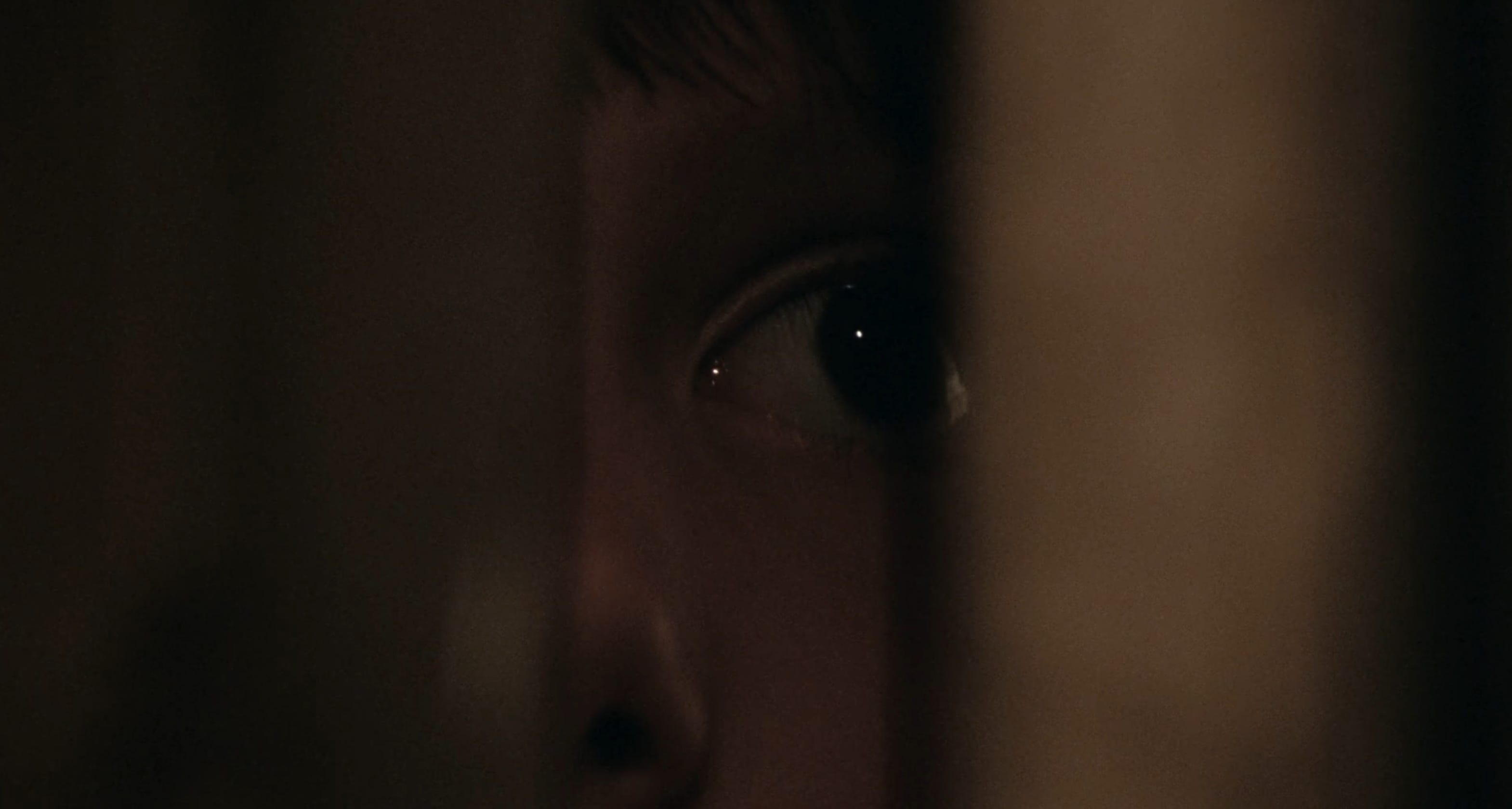
In our class discussion, we noted how this sequence bridges perception and psychology. The camera’s placement at the boy’s eye level forces the viewer into his vulnerability. The frame’s compression mirrors his claustrophobia. Even when the violence erupts, the power of the scene lies not in the blood but in the geometry…the way light and angles communicate fear more eloquently than words ever could.
The Geometry of Grace
After the murder, the story retreats into the quiet of Amish life, culminating in one of cinema’s most graceful sequences…the barn raising. Here, Seale reverses the visual vocabulary of violence. The scene opens with wide, deep compositions: layers of men lifting beams, children carrying tools, women watching from the edges. The color warms into gold; the light becomes moral, almost sacred. The camera moves slowly, deliberately, as if participating in the ritual.
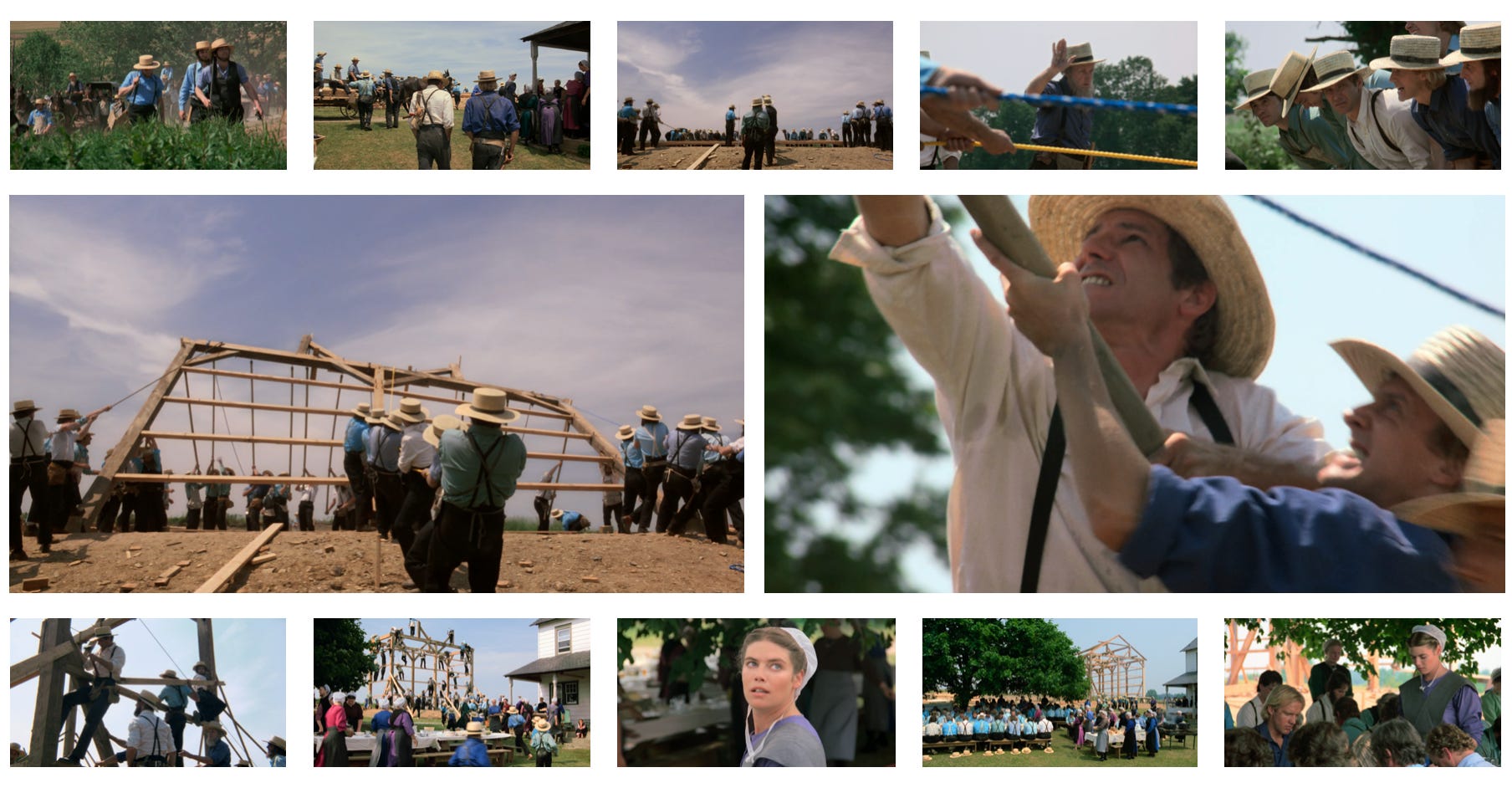
Flat space reemerges in close-ups and symmetrical compositions, reflecting collective order. Deep space widens when John Book (Harrison Ford) joins the work, visually integrating him into the community. Even Rachel’s gaze, captured in limited space with soft focus, communicates intimacy restrained by cultural boundaries. By the end of the sequence, space itself has been healed. The barn stands as both architecture and metaphor—proof that light and labor can rebuild trust.
Seeing Beyond Dialogue
What struck me most while presenting Witness in class was how Seale’s visual storytelling operates independently from dialogue or sound. The film communicates through contrasts…flat versus deep, light versus shadow, stillness versus motion. These choices create an unspoken language that allows the audience to feel moral tension rather than simply understand it.
In the discussion that followed, our professor reminded us that the Amish world’s flatness isn’t emptiness—it’s purity. Its simplicity carries moral depth. The English world’s deep space, filled with motion and color, reflects complexity and moral chaos. Cinematography, in this sense, becomes ethics. Every lens choice, every horizon line, becomes a statement about what is real, what is sacred, and what is corrupt.
The absence of sound heightens this effect. Many of the film’s pivotal moments…the funeral, the murder, the barn raising are nearly silent. When sound recedes, space speaks. In the quiet, we are invited to read emotion through geometry and tone. Light becomes dialogue. Framing becomes subtext. This is what makes Witness such a timeless study in cinematic language: it trusts the audience to see.
Lessons as a Storyteller
Studying Witness taught me that cinematography is not just craft…it is moral architecture. Space, light, and color construct meaning long before a character speaks. Seale’s camera doesn’t just record; it interprets. It stands between the audience and the story like a translator of feeling.
In my own work as a documentarian, this lesson echoes constantly. When interviewing someone or filming a community event, I think about where to place the camera not just for coverage but for truth. A wide shot can communicate belonging. A compressed frame can express isolation. The way light touches a face can reveal dignity, even in silence. Like Seale, I’ve come to see cinematography as an act of empathy…a way of listening with the eyes.
Conclusion: The Light Between Worlds
At its core, Witness is a film about duality…faith and violence, silence and revelation, belonging and exile. But what lingers after the credits is the feeling of its imagery: the sunlight falling across a plain wooden coffin, the glint of steel in a sterile restroom, the glow of dawn on newly raised beams. John Seale’s cinematography transforms these ordinary moments into moral poetry.
Watching the film through the lens of space reminded me that the camera is not just a technical instrument…it’s a storyteller. It can compress or expand a world, judge or forgive a character, sanctify or condemn a culture. Dialogue may tell us what a person thinks; cinematography shows us what they believe.
In Witness, belief is written in light.
Let’s Keep the Conversation Going
What movies or cinematic creations have inspired you—works that speak through image and light rather than words? I’d love to hear your thoughts. Share them in the comments or reach out directly.
And if you’d like to see my full Witness presentation, including scene analyses and visual breakdowns, feel free to contact me. I’d love to come speak with your organization, classroom, or creative team about how visual storytelling goes far beyond dialogue and sound. Here is a link to my Contact Form: https://www.bobbyrettew.com/contact